

What actually happens to our food waste?
In recent weeks, many of us have started recycling our food waste and are already noticing the difference. Our bins aren't smelling as much or filling up as quickly, and we’re doing something positive for the environment with little extra effort.
But there’s still some confusion about what the little grey caddies we all got delivered are all about. Why are we using them? What happens to the food waste? And do we really need to bother?
The new weekly food waste collections are part of the government's Simpler Recycling reforms – designed to keep valuable resources out of landfill and give every household the opportunity to recycle more.
Since April, more than 572 tonnes of food waste have been collected and recycled through the introduction of the new food waste caddy in Blackpool. That’s 572 tonnes of rotting food diverted from landfill. Your scraps are instead being transported to Farington Waste Recovery Park, 25 miles up the road near Leyland.
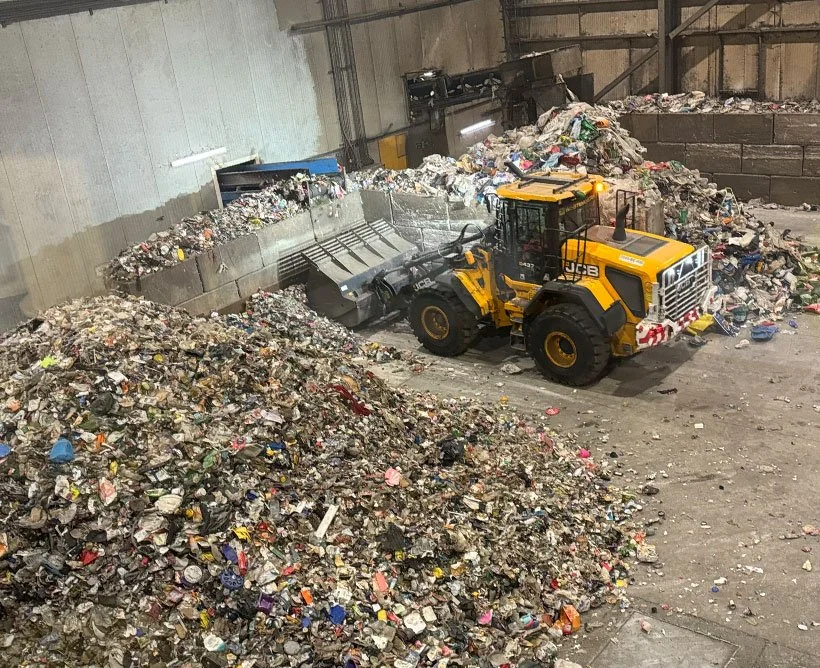
Photo credit: Lancashire County Council
In this facility, some of our food waste is placed in sealed tanks where it naturally breaks down over time. This process produces biogas which can be used to generate renewable electricity and heat, or upgraded into renewable gas for use as vehicle fuel or in the gas network.
This renewable biogas helps generate the electricity and heat needed to run the facility itself, reducing its reliance on energy from fossil fuels. Because our scraps are serving another important purpose at Farington. They’re also being turned into digestate – a useful resource that can be used as organic fertiliser, animal bedding and for crop irrigation – returning valuable nutrients back to farmland.
So instead of throwing food waste away, we're turning it into a valuable resource – producing renewable energy, recycling nutrients back to farmland and keeping waste out of landfill.
Before the introduction of food waste collections, Blackpool’s recycling rates were just 45%. Now, thanks to your efforts recycling your scraps – along with the introduction of brown bins and the reduced cost of green garden waste bins – we’re on track to meet the government's target of 65% by 2035.
Together, these changes are increasing recycling rates, reducing waste and creating a more sustainable future for generations to come.
Another brilliant thing about the facility in Farington is Eco Town – part of an Environmental Education Centre at the site that welcomes group visits. I’m now writing to schools and local youth groups, encouraging them to book a visit so our children and young people can learn all about this fascinating process and find out first hand why it matters that they use the food waste caddies in their homes – and maybe encourage their grown ups to do the same!
As the dad of a young son, it's important to me that we give the next generation a cleaner, greener place to grow up. It might not seem like it matters which bin we scrape our leftover Sunday roast into, but when thousands of households all make the same small change, it makes a real difference. Together we are building a better, greener Blackpool.
Visit ecotown.lancashirerenewables.co.uk to find out more and book a visit.