When Blackpool succeeds, Britain succeeds – why we can’t ignore England’s most deprived town
If this Labour government can’t turn around the fortunes of Blackpool – the most deprived town in the country – it will have failed in its mission to rebuild Britain from the ground up.
The release of the 2025 Index of Multiple Deprivation laid bare what people in Blackpool have known for years – inequality in England is deepening and our town is right at the sharp end of it.
The data show that seven of the 10 most deprived neighbourhoods in England are in Blackpool and 10 of the top 20 fall within our borough. It’s a damning statistic but not one that shocked those of us who live here. Blackpool has topped these scores for more than a decade and previous governments have failed to settle them.
Behind the data are families struggling with insecure work, poor health and rising costs – that’s the daily reality for my constituents who face life expectancies a decade shorter than those living just a few miles away.
A coastal town left behind

From Polly Braden’s photography project Against The Tide, about youth futures in coastal towns
Blackpool is a town with huge potential and pride. But we are also a case study in what happens when national policy neglects the specific needs of coastal communities. The decline of traditional industries, the collapse of secure employment and decades of under-investment in housing, education and health services have left scars that no one-off funding round can heal.
For years Westminster has treated towns like ours as problems to be managed, not places to be invested in. The Tory’s ‘levelling up’ agenda promised transformation but delivered little. Blackpool doesn’t need any more slogans. We need a serious long-term economic and social strategy, backed by the Treasury and matching the ambition of the people who live here.
This is the test for our new Labour government. If we are serious about governing for working people, we must start by proving that places like Blackpool won’t be left behind any longer.
Pride in Place: A welcome start

At Groundworks allotment on Grange Park, where more investment is coming
I welcomed the Pride in Place funding confirmed for Blackpool recently. This £20m in long-term investment for the neighbourhoods of Layton and Grange Park, and the further £1.5m for immediate improvements to the public realm, represents an overdue recognition that towns like ours need serious community-led investment. This funding will help revitalise one of our deprived areas creating safer streets, stronger community spaces and a renewed sense of local pride.
But investing in one area isn’t enough and the scale of need is far beyond what a single project can address. Blackpool is uniquely suited to multiple Pride in Place schemes – across South Shore, Central and Claremont for a start, because each of these areas face distinct challenges rooted in poverty, housing and opportunity. Targeted, place-based investment would have a huge impact on people’s lives – rebuilding them street by street, community by community.
The priorities: Cost of living, jobs and health
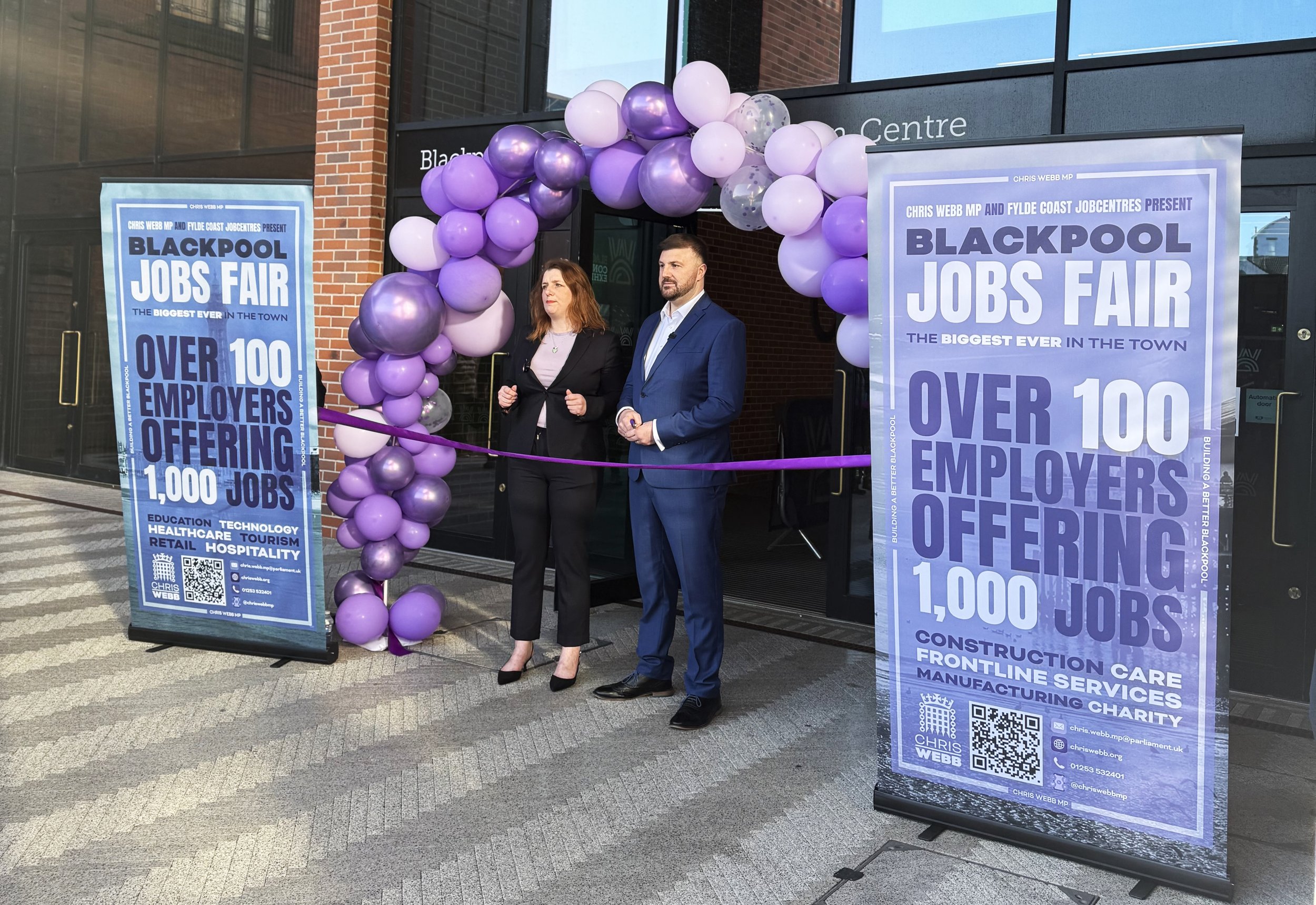
Opening my 2025 Jobs Fair
Since becoming Blackpool South’s MP, my focus has been clear – tackling the cost-of-living crisis, creating decent secure jobs, and improving health and life expectancy.
Here, the cost of living is not a policy debate – it’s the difference between heating and eating. Jobs are often seasonal or low-paid with little room for progression. Health inequalities are so stark that life expectancy in parts of my constituency is among the lowest in Western Europe.
Earlier this year I organised Blackpool’s biggest-ever jobs fair, bringing together 4,000 people, with 1,500 job opportunities and resulting in over 1,000 residents securing new employment. Next year I’m bringing it back bigger and better – with a sharper focus on real careers and progression.
The jobs fair was proof that when people are given opportunities they seize them. It also showed what can be achieved when local employers, community partners and political will come together behind a shared mission to give Blackpool a future.
A government that understands Blackpool

On Waterloo Road with the Prime Minister and Education Secretary Bridget Phillipson
When the Prime Minister visited Blackpool last year he told me that what really struck him was the pride and ambition that people in Blackpool have. What they feel is that the government hasn’t invested in them and hasn’t matched their pride and ambition. He was right.
When he met with a group of sixth-form students from my old school he asked them how many were proud to be from Blackpool. Every hand went up. But when he asked how many of them thought their future jobs would be in Blackpool, only one hand remained raised.
That captures the heart of what we must change. Our young people are proud of where they come from but they don’t yet believe they can build their futures here. That isn’t a reflection on them, it’s a reflection on us – on the economic model and the funding priorities that have failed to match their pride with real opportunity.
We have a chance to change that. The Prime Minister has seen first-hand what’s at stake and he understands the potential of our people. Now he needs to back that understanding with sustained investment. If we can turn his words into action, then Blackpool can lead the way in showing that Britain’s renewal starts from its most deprived communities.
The Treasury must break the mould

The Chancellor delivers her Autumn Budget
The new deprivation figures should be a wake-up call to the Treasury. You can’t build a fair economy when entire towns are left behind. If this government is serious about reducing inequality it must put its money where its mouth is with targeted funding, long-term planning and fiscal recognition of place-based disadvantage.
That means scaling up the ambition and speed of projects like Pride in Place, which move beyond short-term pots of cash and towards sustained multi-year investment tied to measurable outcomes – better jobs, improved health, higher educational attainment and a narrowing of the life-expectancy gap.
Investment decisions have long been governed by the Green Book – a framework that prioritises economic returns in areas already performing well, effectively locking in a bias towards big cities. That might make sense on paper, but it fails places like Blackpool miserably, where the social and economic returns of investment are vast but not always immediate or easily measured.
If Britain is to rebuild fairly, the Treasury must break free from the old mindset that equates value with GDP per square mile. Towns like Blackpool should not be penalised because we start from a position of disadvantage – it’s precisely why we should be prioritised.
The Labour test
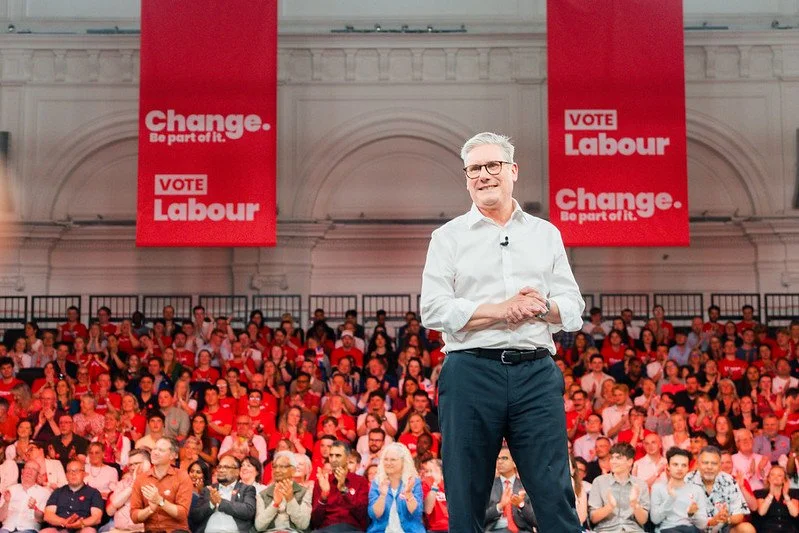
Change will become an empty slogan unless we change the rules
If Labour cannot turn around the fortunes of the most deprived town in England, then we cannot say we are rebuilding Britain from the ground up.
Change will become an empty slogan unless we change the rules – rewriting how the Treasury values investment and factoring in health, wellbeing and long-term regional growth.
Blackpool’s future is Labour’s test. If we can prove that public investment can reach beyond the big cities and deliver real change here, then we will have shown that no community in this country is beyond renewal. Because when Blackpool succeeds, Britain succeeds.